




The Nemesis
Circolo degli Antichi
-
Iscritto
-
Ultima visita
Tutti i contenuti pubblicati da The Nemesis
-
Però bisogna anche ammettere che un ninja gnomo che non abbatte il suo bersaglio con un attacco e si ritrova costretto ad inseguirlo per 1 km lanciandogli shuriken da 1 danno l'uno mi pare un po' triste come idea... la velocità ridotta contrasta fortemente con i pregi previamente evidenziati.
-
Il semidio si trova nel Player's Handbook, pagine 174-175. Per comodità ti ho postato tutto l'intro ai destini epici e anche i destini epici presentati nel Player's Handbook. Mi dispiace, ma è tutto in inglese e spero tu sia pratico della lingua. Buona lettura EPIC DESTINIES Spoiler: Your epic destiny describes the mythic archetype you aspire to achieve. Some characters have a clear epic destiny in mind from the moment they began adventuring, while others discover their epic destiny somewhere along the way. Most people don’t ever come close to achieving an epic destiny. Whether they simply failed in their journey, or whether the universe never intended them to gain such lofty heights, is unknown and unknowable. Your epic destiny sets you apart from such individuals—you know you’re destined for greatness and you have every opportunity to achieve it. Extraordinary Power Compared to a class or paragon path, an epic destiny grants few benefits, but those it bestows are exceptional. Certain laws of the universe work differently for you—and some don’t apply at all. Your race, class, path, and other character elements might define what you can do, but your epic destiny defines your place in the universe. Immortality Each epic destiny defines your lasting impact on the world or even the universe: how people forever afterward remember and talk about you. Some people achieve lasting fame or notoriety without achieving an epic destiny, but that’s a fleeting thing. Inevitably, those people are forgotten, lost in the murky depths of history. Your epic destiny ensures that your name and exploits live on forever. The End Perhaps most important, your epic destiny describes your character’s exit from the world at large (and more specifically, from the game) once you’ve completed your final adventure. It lays out why, after so many adventures, you finally take your leave of the mortal realm—and where you go next. Gaining an Epic Destiny Epic destiny abilities accrue from 21st to 30th level. As shown on the Character Advancement table in Chapter 2, your epic abilities pick up where paragon path benefits leave off. After gaining all other benefits of reaching 21st level (including class features, ability score increases, and the like), you can choose an epic destiny. Epic destinies are broader in scope than a class or paragon path. Though most have certain requirements to enter, even these typically apply to a wide range of characters with various backgrounds, talents, and powers. If you don’t choose an epic destiny at 21st level, you can choose one at any level thereafter. You retroactively gain all benefits of the epic destiny appropriate to your current level. Fulfilling Your Epic Destiny The “Immortality” feature of your destiny is not gained at 30th level. Instead, it is gained when you and your allies complete their Destiny Quest. This is described more thoroughly in the Dungeon Master’s Guide, but essentially, your Destiny Quest is the final grand adventure of the campaign, during which you face the greatest challenges of your characters’ careers. This quest might actually begin before 30th level (in fact, most do), but the climax of the quest can only occur after all participants have reached 30th level. Upon completing your Destiny Quest, your adventuring career—and your life as a normal mortal being—effectively ends. Your DM might give your character a little time to put affairs in order before moving on, or it can occur spontaneously upon completion of the quest. Work with your DM to determine the appropriate timing based on your character, your destiny, and the quest. Once you’ve completed your Destiny Quest and initiated your ascension to immortality, your character’s story has ended. He lives on in legend, but he no longer takes part in mortal events. Instead, it’s time to create a new group of adventurers and begin a new story. Growing into Your Character’s Destiny Epic destinies are as much about a player character’s place in the world and the cosmos as they are about gaining new abilities. Therefore, campaigns that intend to play through the epic tier often weave PCs’ expected epic destinies into the storyline before 21st level. A character working to become a Demigod might conduct herself differently from a character who believes he is destined to be a Deadly Trickster. Destiny Quests The Destiny Quest is a dangerous epic adventure tied to a particular epic destiny (or perhaps to multiple epic destinies in the group) that a high-level adventuring party can undertake to complete the storyline (or storylines) of epic characters. It’s entirely possible that a DM’s campaign plans don’t lead through any Destiny Quests. But if a DM doesn’t have solid plans for their campaign during the epic tier, orienting several sessions around quests tied to each PC’s epic destiny is an excellent route to explore. Destiny Quests and Immortality Groups that want a definite endpoint to their PCs’ adventures can use Destiny Quests as a springboard for showing how their 30th-level character eventually leaves the mortal world and ascends into the world of gods and legends. This type of endpoint obviously won’t appeal to all groups. Many DMs will have their own ideas of how their campaign should end. Other groups will prefer to keep their 30th-level characters around as options for high-level play. Therefore, the notes that appear in each of the epic destinies below are entirely optional. We present them mainly to help you get in the mood for what an epic character’s final destiny might look like, with the understanding that you or your DM might have other plans for your PC’s final destiny. Introducing the Epic Destinies Epic Destinies are presented in alphabetical order. Each destiny description provides a general overview, followed by game rule information. Prerequisites: If the epic destiny has requirements for entry, they are listed here. Destiny Features: Every epic destiny has a unique mix of features described in this section. Upon choosing an epic destiny, you gain the destiny feature listed for 21st level. Powers: A full description of the power or powers granted by the epic destiny appears here. Immortality: This entry describes your particular form of immortality once you’ve completed your Destiny Quest. Archmage Spoiler: As the Archmage, you lay claim to being the world’s preeminent wizard. Prerequisite: 21st-level wizard Your lifelong perusal of grimoires, librams, tomes, and spellbooks has finally revealed the foundation of reality to you: Spells are each tiny portions of a larger arcane truth. Every spell is part of some far superior working, evoking just a minuscule fraction of that ultimate formula. As you continue your studies, you advance your mastery of spells so much that they begin to infuse your flesh, granting you a facility in their use undreamed of by lesser practitioners. You are often called to use your knowledge to defend the world from supernormal threats. Seeking ever greater enlightenment and the magical power that accompanies it, you are at times tempted by questionable relics, morally suspect spells, and ancient artifacts. Your destiny remains yours to choose—will you be archmage or archfiend? Immortality, of a Sort Archmages are an idiosyncratic lot. There’s no telling what choices the preeminent wizard of the age will make when he has completed his destiny. The following section details a path several Archmages have walked, but your path might vary. Arcane Seclusion: When you complete your final quest, you retreat from the world to give your full time and attention to the study of the ultimate arcane formula, the Demispell, whose hyperplanar existence encompasses all the lesser spells there ever were or ever will be. To aid your study, you build a sanctum sanctorum. At your option, your retreat provides you complete seclusion, and thus could take the form of a tower lost somewhere in the Elemental Chaos. However, you might desire to retain a tie to the world, and thus build a sanctum with a connection to the world. In such a case, you might found a new order of mages for which you serve as the rarely seen High Wizard. Alternatively, you might found a school of magic, for which you serve as the rarely seen headmaster. Regardless of your retreat’s physical form or temporal connection, your contemplation of the arcanosphere persists. As the years flow onward, your study of the fundamental, deep structure of the cosmos removes you from the normal flow of time. Eventually your material shell fades as you merge into the Demispell itself. Thereafter, your name becomes tied to powerful spells and rituals used by lesser wizards. Archmage Features All Archmages have the following features. Spell Recall (21st level): At the beginning of each day, choose one daily spell that you know (and have prepared today, if you prepare spells). You can use that spell two times that day, rather than only once. Arcane Spirit (24th level): Once per day, when you die, you can detach your spirit from your body. In arcane spirit form, you heal to maximum hit points and gain the insubstantial and phasing qualities. You can cast encounter spells and at-will spells while in arcane spirit form, but you can’t cast daily spells, activate magic items, or perform rituals. If you die in arcane spirit form, you’re dead. At the end of the encounter, after a short rest, your arcane spirit rejoins your body, if your body is still present. Your current hit point total is unchanged, but you no longer experience the other benefits and drawbacks of being in arcane spirit form. If your body is missing, you will need other magic to return to life, but can continue adventuring in arcane spirit form if you like. Archspell (30th level): Your comprehension of the ultimate arcane formula and of the spells that constitute it reaches a new threshold. Choose one daily spell that you know. You can now cast that spell as an encounter spell (rather than as a daily spell). Archmage Power Shape Magic, Archmage Utility 26 You reach into the ebb and flow of arcane energy and pluck a spell you have already used out of the invisible tide, instantly recalling it to memory. Daily Standard Action; Personal Effect: You regain one arcane power you have already used. Deadly Trickster Spoiler: The universe is a vast stage set up to amuse you and spark your curiosity, and you are the ultimate trickster—amusing, unrivaled, and deadly. Prerequisites: 21st level; Dexterity 21 or Charisma 21; training in Acrobatics, Bluff, Stealth, or Thievery As a Deadly Trickster, you might be a wanderer, thief, cheat, pragmatist, or survivor. Or you might be something stranger still—a hero. You delight in ever-stranger wonders, from the loftiest heights of the celestial spheres to the ash-strewn depths of the encircling chaos. As you take a firmer grasp on your destiny, you alternately scandalize, charm, upset, reward, and confound those around you. Some prophecies predict the Deadly Trickster will eventually betray his comrades and, in so doing, tumble princes, kingdoms, and perhaps even celestial realms. However, conflicting divinatory writs foretell the trickster’s unexpected but vital aid, thus forestalling ultimate disaster and helping to create a new era of prosperity. Rogues and warlocks are the most likely characters to become Deadly Tricksters, but they have also appeared from the most unlikely of origins. Immortality? Deadly Tricksters have to resist the temptation to take the dark path. Here’s an example of how a campaign might present that choice. Travel by Crooked Paths: When you complete your final quest, your legendary reputation is assured. The stories of your convoluted exploits live forever. If you stand with your companions and see them through their final quest, embracing their cause as yours, you are acclaimed a true hero. You are acquitted of past transgressions, if any, and you are commended for conquering your erratic temperament when it counted most. You are invited into the realm of the entity you most admire and provided a palace, riches, true friends, and a legacy told and retold for a thousand years describing how the Trickster’s changeable nature burned steady and pure in the finally tally. If, however, you betray your comrades and disrupt the completion of their final quest (or merely fail to aid them), you are cast out by all who once loved or trusted you. Your worst enemies welcome you to their courts as a newfound friend, and your name becomes a dark curse, forever despised by all who hear it. Deadly Trickster Features All Deadly Tricksters have the following class features. Sly Fortune’s Favor (21st level): You have a knack for getting out of tough situations. Three times per day, as a free action, you can reroll a d20 roll (attack roll, skill check, ability check, or saving throw). Trickster’s Control (24th level): If you roll an 18 or higher on the d20 when making the first attack roll for an encounter or daily attack power, that power is not expended. Trickster’s Disposition (30th level): Once per day, you can tell the DM to treat the result of a d20 roll he just made as a 1. No rerolls are possible. Deadly Trickster Power Epic Trick, Deadly Trickster Utility 26 When the need is great, you pull an amazing trick out of thin air. Daily ✦ Healing Minor Action, Personal Effect: Regain all of your hit points and healing surges, automatically save against all effects on you, recover all expended encounter powers, or recover all expended daily powers except this one. Once you use this power, you cannot recover it except by taking an extended rest. Demigod Spoiler: A divine spark ignites your soul, setting you on the path to apotheosis. Prerequisite: 21st level Your flesh becomes more than mortal and partakes of the divine vigor enjoyed by the gods themselves. Your epic-level companions are fast, strong, and smart, but you have the spark of godhood that sets you ever so slightly above all mortals. Deities from every plane eventually learn your name, your nature, and your goals. Some might monitor your progress to observe whether you possess the mettle of a true demigod, and a few could throw roadblocks in your path. It is in your hands to impress the lords of creation, or disappoint them. If you survive, overcome all challenges put before you, and reach the heights of ability achieved by few mortals, you are worthy to ascend to the ranks of the divine. Exarch or Free Agent? One or more gods might ask that you serve them as a probationary exarch while you work toward your own divine goals. You do not gain any additional abilities for accepting such a position, though you do gain access to a divine connection that might grant you information helpful for completing your quests. On the other hand, you might be required to perform tasks that delay your own goals, or even work at crosspurposes to your goals. No one said godhood would be easy, and acting as a free agent has its own problems as various astral beings take your measure. Route to Immortality At least one Demigod has chosen the path to ascension outlined below. Your own route to divinity might be different. Divine Ascension: When you complete your final quest, your divine nature yearns to complete your apotheosis. Upon ordering your mortal affairs, the astral flame smoldering within you detonates, consuming all that remains of your mortal flesh. The astral flame leaves behind a fledgling god, flush with the power only the truly divine can comprehend and wield. You ascend, blazing like the sunrise (or darkening the skies like an eclipse, if your inclinations run dark). Streaking into the Astral Sea, you are taken up into the realm of an established god who welcomes your strength. You join that god’s pantheon and take on an aspect of the god’s portfolio. Soon enough, your transcendent senses discern mortal prayers directed at you. Demigod Features All Demigods have the following class features. Divine Spark (21st level): Increase two ability scores of your choice by 2 each. Divine Recovery (24th level): The first time you are reduced to 0 hit points or fewer each day, you regain hit points equal to half your maximum hit points. Divine Miracle (30th level): When you have expended your last remaining encounter power, you regain the use of one encounter power of your choice. In this way, you never run out of encounter powers. Demigod Power Divine Regeneration, Demigod Utility 26 You ignite the divine spark that glows within you, unleashing a wave of regenerating energy for a short time. Daily ✦ Healing Minor Action, Personal Effect: You gain regeneration equal to your highest ability score until the end of the encounter. Eternal Seeker Spoiler: You continue to search for your ultimate destiny, but that doesn’t stop you from participating (some say interfering) in world-shaking events. Prerequisite: 21st level You might be a hero whose destiny is still unfolding. Maybe you’re a free spirit who wants to experience everything the universe has to offer before tying yourself to a particular piece of the cosmos. You might be a rebel who hates the concept of having a singular destiny and therefore claims that you’re not even interested in having a destiny. Or you may just want to avoid taking a side. Whatever the case, you’re carving such a wide swath through events that your destiny will have no problem finding you when the time is right. Seeking Immortality? No one can predict your final destination. Compared to many other epic characters, your destiny has the advantage of being entirely mutable, so you might end up forging your own destiny by helping your friends accomplish theirs. Eternal Seeker Features All Eternal Seekers have the following class features. Seeker of the Many Paths (21st level): When you gain a class encounter or daily power by gaining a level, you can choose your new power from any class. Learning a power doesn’t necessarily equip you with all the attributes required to use the power. For example, a fighter who learns a wizard spell as an Eternal Seeker would not gain the ability to use implements that make casting wizard spells more effective. Therefore, you’re usually better off learning powers that are compatible with what you already know. Eternal Action (24th level): When you spend an action point to take an extra action, you also gain an extra action on your next turn. The extra action you take on your next turn doesn’t benefit from any abilities (such as many paragon path features) that affect what happens when you spend an action point. Seeker’s Lore (26th level): You gain one 22ndlevel utility power from any class. Seeking Destiny (30th level): You gain the 24thlevel epic destiny feature from any other epic destiny that you qualify for. P.S.: Scusate l'incongruenza temporale ma purtroppo non ho potuto inviare il messaggio quando l'avevo terminato.
-
Se il DM fa sì che l'anima in questione sia interpellabile, nello stato in cui la riduci, nel senso che le puoi proprio effettivamente parlare e lei ti può rispondere, mantenendo quindi anche un abbozzo di coscienza, ergo mente, se l'anima appartiene ad un essere particolarmente importante o con poteri soprannaturali io spenderei tutto il mio tempo per cercare di farmi insegnare con la forza, oppure anche solo convincendolo, i segreti ed i poteri che conosce. In quello stato la si può anche ricattare e, se il master la riconosce anche come una mente senziente, la si può bersagliare con incantesimi come Charm su mostri e Dominare mostri (se hai un mago/stregone nel party) per ottenere il risultato desiderato senza incorrere in troppi problemi.
-
Un po' come Doomveil, la Shadow Sun Ninja mezz'orca del Tome Of Battle
-
Non penso però che potrò attivarmi tanto presto per chiedergli questo favore: al momento sono tenuto al guinzaglio dal cacciatore, che mi ha sventuratamente colto alla sprovvista e legato a sè con un incatesimi di compulsione/restrizione, che a suo volere mi blocca totalmente. Sarò liberato da ciò non appena avrò ottenuto un preziosoe antico artefatto per lui, il quale però sarà venduto all'asta pochi giorni dopo la data attuale dell'ambientazione. Però, pensandoci un momento, quest'abilità potrebbe anche essere una delle chiavi che mi potrebbero aiutare nell'impresa...
-
Non è necessario scervellarsi tanto, secondo me: basta dare un'occhiata allo gnomo di ... :lol::lol:
-

Dall'album: Immagini per il profilo
-

Dall'album: Immagini per il profilo
-

Dall'album: Immagini per il profilo
-
Tra l'altro nella storia, che è ambientata a Padova, Siegfried Engel (il mio vampiro) ha un conoscente Lasombra, e non dovrebbe essere troppo difficile chiedere di insegnargli qualcosina... Ciò che invece è a sfavore è il numero di punti da spendere: 3 al primo livello della capacità, poi 7 x il numero di pallini già in possesso, per farla salire.
-
Anche io lo avevo pensato, ma il master mi ha detto che il clan degli Tsimisce prevede Auspex, come disciplina. Esiste qualche modo per aggirare la questione?
-
Infatti ho agito così. Solo che, essendo la mia prima avventura in assoluto, non sapevo praticamente nulla, e ho fatto il PG con le seguenti Caratteristiche: Forza 1 Destrezza 3 Costituzione 3 (aumentata di 1) Carisma 4 Manipulation 4 Aspetto 2 Percezione 3 Intelligenza 4 (aumentata di 1) Saggezza 2 Inoltre gli ho messo 5 gradi in Medicina e anche 3 gradi in armi da fuoco, ovviamente un tedesco ex-nazista che si rispetti deve saper minimo come utilizzare una Luger e un Mauser Come capacità di clan gli ho dato 3 in Vicissitudine e 1 in Auspex. Come privilegi gli ho dato "9 vite" e "Vista sviluppata", e come svantaggi "Cacciato" e un altro da 2 punti, ma nulla di compromettente. Come cacciatore ho un paladino dell'ordine di San Leopoldo, un tizio biondo, occhi verdi, occhialuto, con la barba trascurata e uno strano sorriso da schizzoide a 48 denti: sarà mica Andersen?!
-
Salve a tutti! Avrei bisogno di un disegno tipo avatar, di un dragonide di colore nero-bluastro con un paio di zanne vampiriche e gli occhi celesti fiammeggianti (tipo questi), più o meno come QUESTO, però un pochino più come QUESTO P.S: Se qualcuno è interessato a farmi questo favore, per favore mi avvisi tramite messaggio privat, per non creare situazioni in cui l'uno e/o l'altro attenda invano risposta.
-

Dall'album: Hellsing
-
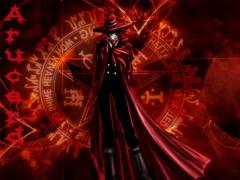
Dall'album: Hellsing
-
Io avrei in mente per te una razza mostruosa presa dal manuale Warcraft The Roleplaying Game - Manual Of Monsters, il Troll della foresta, ovvero Forest Troll: Spoiler: Forest Troll Characters A forest troll's favored class is barbarian. Forest troll characters possess the same racial traits as jungle trolls (see subsequent entry), except as noted below. - +6 Strength, +2 Dexterity, +6 Constitution, -2 Wisdom, -4 Charisma. -Large size. -1 penalty to Armor Class, -1 penalty on attack rolls, -4 penalty on Hide checks, +4 bonus on grapple checks, lifting and carrying limits double those of Medium characters. - Spacemeach: 10 ft./lO ft. - Racial Hit Dice: A forest troll begins with two levels of monstrous humanoid, which provide 2d8 Hit Dice, a base attack bonus of +2, and base saving throw bonuses of Fort +0, Ref +3, and Will +3. - Racial Skills: A forest troll's monstrous humanoid levels give it skill points equal to 5 x (2 + Int modifier). Its class skill is Hide. Forest troll's receive a +4 racial bonus to Hide checks in forested environments. - Racial Feats: A forest troll's monstrous humanoid levels give it one feat. - Special Qualities (see above): Fast healing 2. - Automatic Language: Low Common. - Level adjustment: +1. In riassunto toglie un po' di carisma e saggezza, ma ti conferisce notevoli bonus in forza e destrezza, qualcosina anche in destrezza. Il LEP totale è +3, dato da 2 HD da umanoide mostruoso e un LA +1. Inoltre esso ti garantisce anche un non poco vantaggioso BaB +2 e TS +3 sia ai riflessi che alla volontà, nonchè un talento, e +4 alle prove di nascondersi in ambiente boscoso. Per non parlare poi della taglia grande e dell'utilissima, a mio parere, abilità Fast Healing 2, con cui recuperi 2 PF a round, e, se non ricordo male, in qualche manuale esiste perfino un sistema per aumentare questo valore. Esso si rivela specialmente utile soprattutto ad inizio campagna, magari nel caso dovessi trovare trappole che infliggono danni, ma non eccessivi (anche solo 5 o 6 danni possono essere fatali agli inizi, in certi momenti). La razza è perfettamente compatibile con D&D perchè il manuale in cui è presente fa parte del circolo d20.
-
In merito alla scelta di paladino, posso dirti che mi sembra in assoluto la scelta più azzeccata come classe per quella razza, almeno per ora. Per il discorso del Mago-Spada mi associo a Gorthar Bonecrusher, il genasi è senza dubbio il migliore, soprattutto se poi come cammino leggendario gli applichi quello che permette di utilizzare più di una manifestazione alla volta... Invece, parlando del nome, scegline uno che ti piace: immagina il tuo PG, dagli forma, colore, voce e atteggiamento. Collocalo in un ambiente che preferisci, quindi immaginagli un adeguato nome e/o cognome. Oppure prova ad associare alcune parole secondo te adatte al tuo PG, in una lingua che stimi, e rileggile al contrario, oppure anagrammale, o mischiale con parole di altre lingue. Ci sono infiniti modi di decisione del nome del proprio PG.
-
Alla fine il MASTER mi ha fatto giocare uno Tzimisce. La parte relativa alla necromanzia è stata rimossa, sostituita da una buona capacità in vicissitudine. Così viene anche spiegato il modo in cui il personaggio, finito il regno nazista, sia riuscito a scamparla senza troppi problemi, rifacendosi i connotati. Vi ringrazio comunque per i vostri preziosi consigli anche se non sono dopotutto serviti, alla fine. Grazie a tutti
-
Fra poco inizieremo una campagna di VTM e mi sono scelto un personaggio. Pensavo ad un vampiro tedesco, di una delle generazioni precedenti la 13a, divenuto vampiro negli anni 20 - 30, medico di professione e appassionato di negromanzia. Fece parte dell'equipe di medici che fecero esperimenti sugli ebrei durante le reclusioni nei campi di concentramento (potete immaginare che genere di esperimenti praticasse), però sotto falso nome, affinchè potesse poi in futuro non avere problemi legali. Egli però, seppure agisca talvolta in gruppo, abitualmente "non-vive" da solo, procacciandosi mortali in luoghi lontani da occhi indiscreti, spesso con la presenza di un testimone, che poi convince di essere lui stesso autore dell'omicidio/scomparsa, già poichè talvolta egli si porta via il cadavere dissanguato nella sua dimora, per poi trasferirlo in uno studio appositamente dedicato alle sue arti negromantiche. Le domande ora sono: - che clan mi consigliate? - su che caratteristiche/statistiche/ecc. mi suggerireste di applicare più potere? - come mi consigliereste di gestire il personaggio?
-
In realtà, anche se si desidera rimuovere il lato orientale dalla tua ambientazione, devi comunque considerare un'importante cosa, ovvero il fatto che nell'epoca greco-romana esistevano parecchi contatti con l'oriente, soprattutto dal punto di vista commerciale. Quindi, a mio parere, non sarebbe necessario rimuovere il monaco, a meno che non lo si voglia togliere per altre ragiononevoli ragioni. Uno dei modi più semplici di introdurlo in una camapagna con un'ambientazione greco-romana, inoltre, secondo me potrebbe essere quello di presentarlo come uno schiavo importato da una regione asiatica, magari poi introdotto in una delle arene italiche (se non addirittura nel colosseo). Questo è il mio consiglio, ovvero di non eliminare il monaco, perchè anche come il barbaro (Asterix & Obelix, per fare un paio di esempi) esso è una classe non adatta alla civiltà greco-romana in senso stretto, ma invece molto ben ambientata dal punto di vista etnografico.
-
E se un arcidiavolo promuovesse un diavolo per le sue opere durante l'avventura con il party? La cosa è alquanto macchinosa, ma in teoria può funzionare. Inizi come diavoletto standard potenziato (tipo le api regina per gli alveari, per fare un paragone non molto azzeccato) e finisci per divenire un diavolaccio della fossa. Questa cosa, ovviamente, è disponibile solo qualora il gruppo in qualche modo esaudisse i desideri o perseguisse i fini dell'arcidiavolo, anche all'insaputa di ciò.
-
Lo so, l'ho già fatto partire grande, ma è un casino anche solo metterlo giù così. Se vuoi contribuire un tuo aiuto non può essere altro che ben accetto, se costruttivo. Non ho molto tempo da dedicare a ciò, perciò se avete dubbi o proposte dite pure, o avanzate pure, sarò felice di rendere al meglio questo progetto.
-
L'obbiettivo è quello di rendere il mostro "Diavolo della fossa" una razza giocabile, dotata di 18 DV e un LA +6, quindi con 24 livelli di progressione di personaggio giocante. Dateci uno sguardo e dite cosa ve ne pare. Alcune parti sono in italiano, altre in inglese, per motivi di tempo (mancanza di tempo per tradurre dal manuale). Buona lettura PIT FIEND MONSTER CLASS.zip
-
-
Questo perchè un diavolo della fossa è una creatura extraplanare (per il punto di vista delle creature terrene) che rimane in eterno negli inferi a torturare le anime dei dannati. Ma pensa di prenderne uno e espiantarlo da lì. Come un orco cresciuto tra gli elfi può essere avvezzo alla magia, per imprinting, similmente un diavolo della fossa portato al di fuori degli inferi può sviluppare tratti o caratteri particolari, come acquisire livelli di classe. Non potrebbe forse essere possibile di diventare chierico di un qualsiasi tipo di divinità malvagia? (con le dovute restrizioni, ovviamente)